
Cost
Concrete Driveway Cost in Antioch
Find your size in the published table, then read the two Village rules that shape what you are allowed to build and what the paperwork will cost you.
Two things make an Antioch driveway quote different from a national average. The Village decides the shape of it, and the Village charges for the permit as a slice of the bid rather than as a fixed fee. Both are worth understanding before you collect prices. When you are ready for an actual number on your own drive, start with our concrete driveway in Antioch, IL page and a free estimate.
The published table, by footprint
HomeGuide prices concrete driveways against real dimensions:
- 1-car, 10 by 20 (200 sq ft) - $1,200 to $3,000
- 1-car, 12 by 24 (288 sq ft) - $1,700 to $4,300
- 2-car, 20 by 20 (400 sq ft) - $2,400 to $6,000
- 2-car, 24 by 24 (576 sq ft) - $3,500 to $8,600
- 3-car, 24 by 36 (864 sq ft) - $5,200 to $13,000
Their national data. Measure what you have, find the nearest row, and treat it as the shape of the answer rather than the answer. What follows is what moves you inside your row, and what Antioch adds on top.
Village rule one: the shape is not entirely yours to choose
Antioch's code is specific about driveway geometry, and it catches people who have already had a design drawn.
Twenty feet is the maximum width at the curb. Note where that is measured. It is the point where your driveway meets the street, not the width up by the garage. A generous parking area nearer the house is fine; it simply has to narrow before it reaches the road.
Five feet of setback from any property line. With one carve-out worth knowing: where the garage is side-loaded, the driveway may come inside that five feet, provided five feet of green space is kept between it and the driveway next door. If you are on a narrow lot with a side-entry garage, that exception may be the thing that makes your design work.
A bidder who has not mentioned either of these has priced a driveway rather than your driveway. It is a cheap thing to check early and an expensive thing to discover late.
Village rule two: the permit is a percentage
Most towns charge a flat rate for this. Antioch does not. Driveways and parking lots are charged at $50 minimum or 2% of the total estimated cost, whichever is greater, with a $12 filing fee on top.
Two consequences. First, the permit on a large driveway is a real number rather than a rounding error, and it should appear on your quote rather than surprising you. Second, the fee is calculated from the declared project cost, which gives you a useful cross-check: the figure a contractor declares to the Village ought to match the figure they quoted you.
What moves you inside your row
Depth. Cars and light pickups are comfortable on four inches. Step up to six once the regular occupant is a motorhome, a boat trailer or something with a commercial plate, because an under-thick slab splits right through instead of merely roughening on top, and a full-depth split is beyond repair.
The ground. Dug out, refilled with graded stone, consolidated a layer at a time. Lake County driveways succeed or fail on this one item, which is precisely why it is the line a contractor shaves when they want their number to look attractive.
How the mix gets there. A chute reaching the formwork directly keeps the pour short. Once the concrete has to be wheeled or pumped any distance, you are paying for labour by the hour instead.
The mix. A driveway takes deicing salt every winter, which is the hardest thing residential concrete faces here. Entrained air is what carries it through, and it is worth asking which specification is being ordered rather than assuming.
Whether an old surface is coming out. Demolition and haulage are charged by weight and belong on their own line. An old asphalt drive weighs a good deal less than a concrete one going to the same tip, which is one of several places where the two materials stop behaving like equivalents.
What a good driveway bid already states
- The finished depth, measured over compacted stone
- Base depth and how many compaction passes it gets
- Confirmation that the design meets the twenty foot curb width and the five foot setback
- Who applies for the permit, and what project cost is being declared
- The air entrainment specification for a salted surface
- Whether tear-out and disposal are inside the price
Get a real number for your driveway
Four quick questions and a local concrete contractor will be in touch to set up a free on-site estimate. No obligation, and "just pricing it out" is a perfectly good answer.
The aftercare calendar
Nothing below is driveway-specific. Pour a patio or a shed slab and the twelve months that follow look identical, which is why the other Explained guides send you to this section instead of restating it.
Days 1 to 7: nothing on it
No vehicles. Walking on it after a day or two does no harm, but a car pressing into concrete this young will leave its mark, because the strength simply is not there yet. Crews around here treat seven days as the line.
Weeks 1 to 4: let it dry
Normal use is fine. Do not seal it yet. Concrete needs roughly a month to release enough moisture for a sealer to bond properly, and sealing early traps water in the slab.
Month 1: seal, if you are going to
On plain concrete this is optional. On any decorative or coloured finish it is not, because the colour lives in the sealer. Once you start, plan on revisiting it every few years.
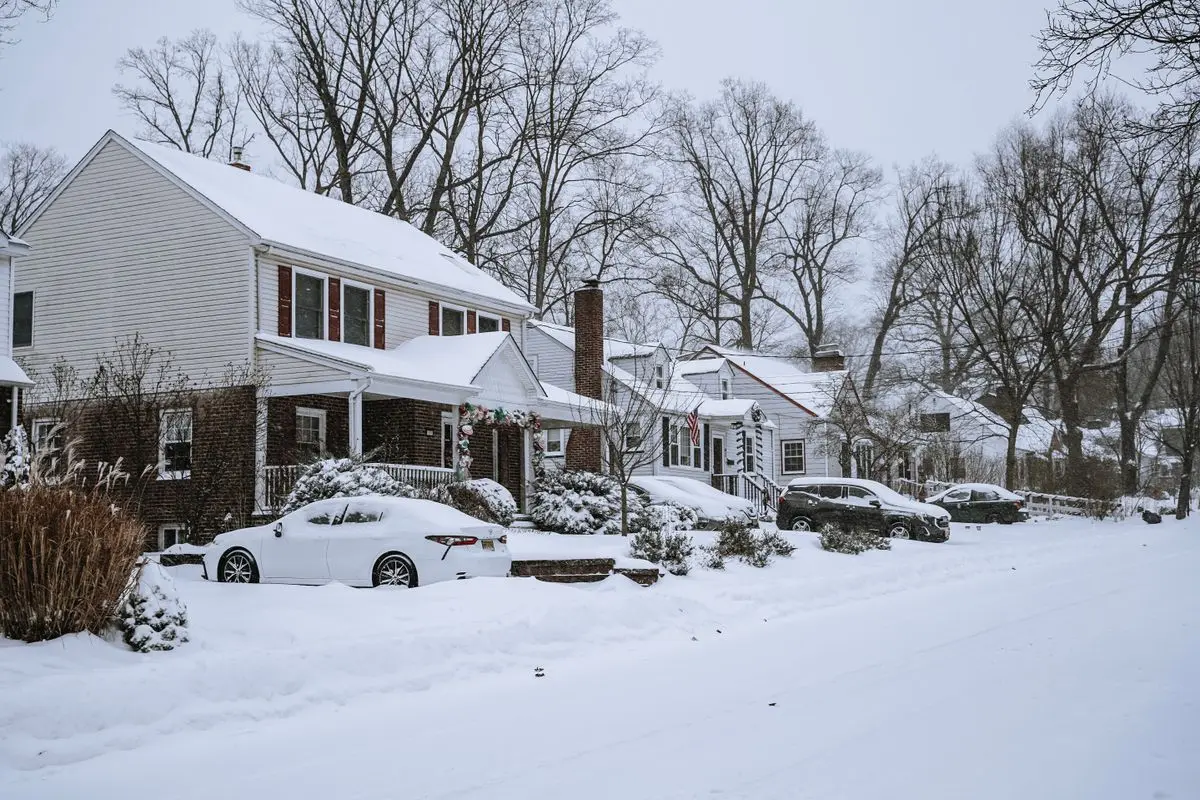
Winter 1: grit only, no chemicals whatsoever
The most important line on this page. Concrete in its first season is still full of water and has not matured enough to survive being frozen while it is. Deicers do two harmful things at once: they keep meltwater sitting on the surface and they multiply the number of freezes it endures.
You will be told that a magnesium or calcium product is the safe alternative. The marketing says so; the testing does not. When Oregon's transportation department ranked chloride deicers by the compressive strength each one stripped out of concrete, magnesium came last of the group. Grit handles the traction problem and does nothing at all to the slab.
Year 2 onward: back off the salt anyway
Mature concrete tolerates deicers far better, but tolerating is not the same as being unaffected. Scaling is cumulative. Sand remains the cheapest way to keep a driveway looking new for a decade longer than it otherwise would.
When the right answer is a different trade
Some driveways do not need pouring at all. If yours is intact but sitting unevenly, because one panel has sunk or a joint has risen against its neighbour, the fix is to jack it back up. Firms exist that do nothing else, with kit built for the purpose, and we are not among them. We would rather point you at them than watch a perfectly good driveway get broken up.
Judge it on the state of the concrete, not on how bad the trip hazard looks. Raising a slab moves it; it mends nothing. Where the panels have already fractured apart, all you buy is the same wreckage sitting a little higher.
Past the pricing, the job itself is set out on our concrete driveway page: what gets built, who lodges the Village application, and how an on-site estimate is arranged.
Sources
- HomeGuide - driveway cost by size, one-car through three-car. Verified 2026-08-18.
- Village of Antioch Code § 10-6-5 - twenty foot maximum width at the curb, five foot property line setback and the side-loaded garage green space exception (Ord. 19-12-43).
- Village of Antioch Code § 13-1-6 - driveway and parking lot permit fees at $50 minimum or 2% of estimated cost plus filing fee.
- Illinois Ready Mixed Concrete Association - residential driveway construction, curing and care.
- Oregon DOT SPR 742 - chloride deicers measured against compressive strength loss.
- NRMCA CIP 2 - surface scaling and the freeze-thaw mechanism.